Quick answer
You can learn pottery at home by starting with hand-building instead of a wheel. Set up a small table with clay, water and a few tools, practise pinch pots and even slabs for a week or two, learn to join clay with score and slip, then have your pieces fired at a local studio. A step-by-step video course shortens the learning curve.
- Hand-building needs a table, not a studio, so it is the natural way to learn at home.
- Plan around firing: find a studio that will fire your pieces before you start.
- Most beginners make a usable cup within a few weeks of regular practice.
- Video lessons work well because you can pause, rewind and watch hands up close.
In this guide
Most people who want to learn pottery assume the first step is signing up for a wheel class. Classes are lovely, but they are often fully booked, far from home, and built around a machine you can't take home with you. There is another way in, and it is how most pottery in history was made: by hand, at a table.
Can you really teach yourself pottery?
Yes. Hand-building is the most learnable form of pottery at home because every step happens slowly and in plain sight. You can stop, look at what the clay is doing, and try again. Nothing spins away from you. The skills build on each other in a clear order: shaping, joining, drying, cleaning, colouring and firing.
What is hard to teach yourself is judgement: how thick is too thick, when clay is dry enough to handle, and why a piece cracked. That is where good lessons help. Watching an experienced potter's hands, close up, saves weeks of guessing.
What you need before you start
- A work surface covered with a linen or cotton cloth, or a rough wooden board. Clay sticks to smooth surfaces.
- Clay. A bag of smooth white or buff clay. Ask your firing studio which clay they accept.
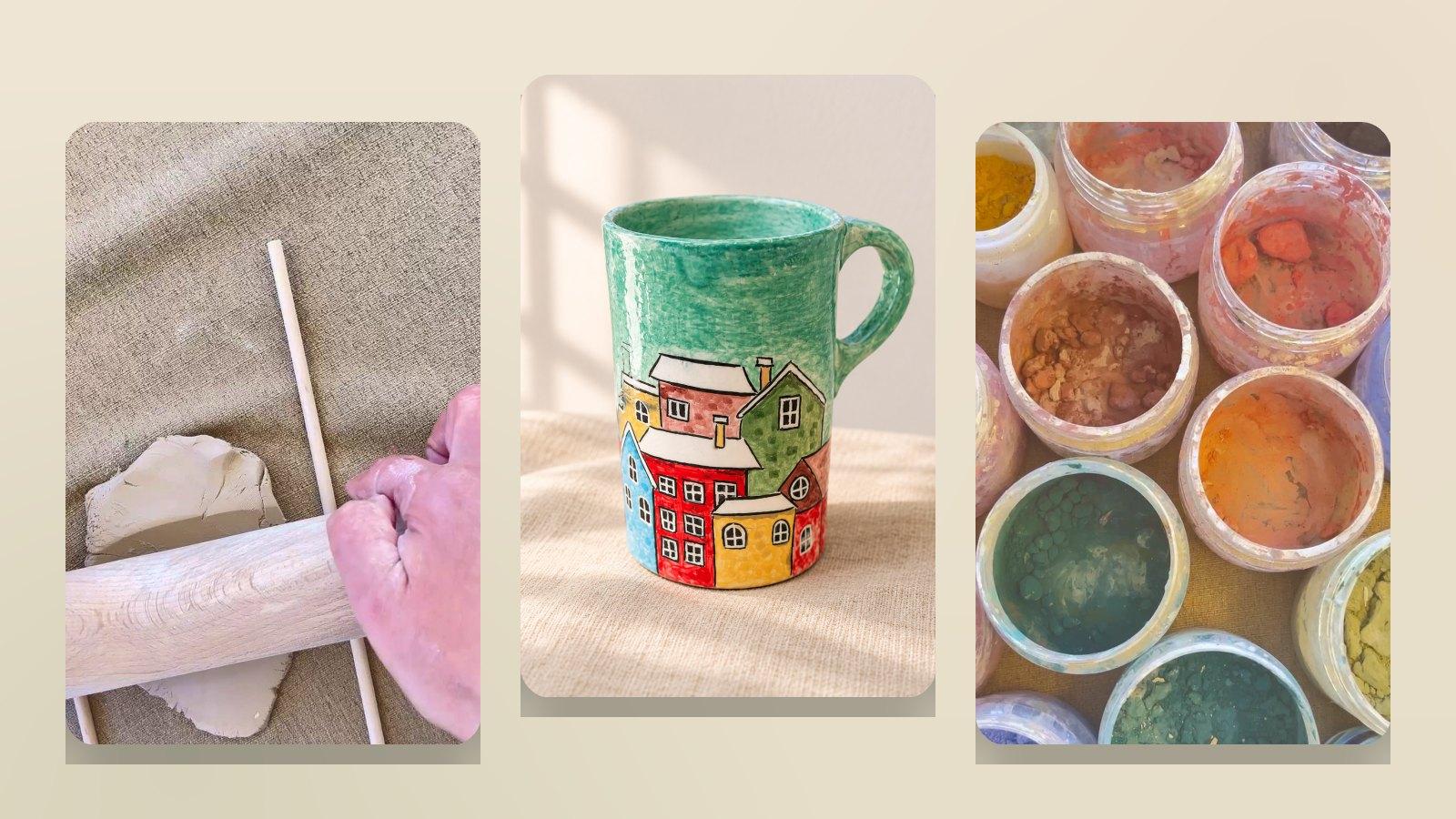
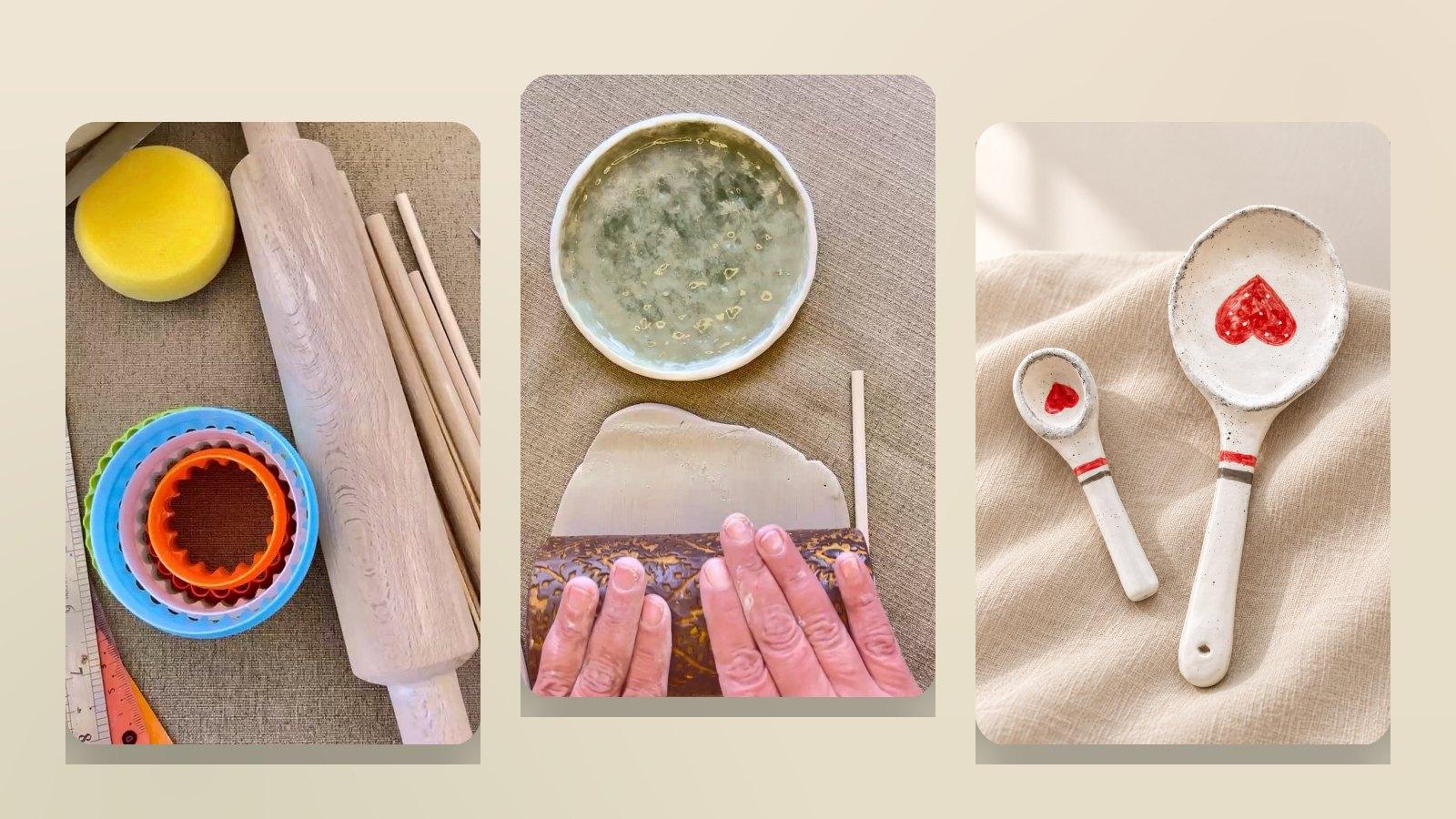
- Basic tools: a rolling pin, two wooden guide sticks of the same thickness, a craft knife, a sponge, a bowl of water and a needle or skewer.
- Somewhere to fire. Call a community studio or local potter before you begin. It shapes everything else.
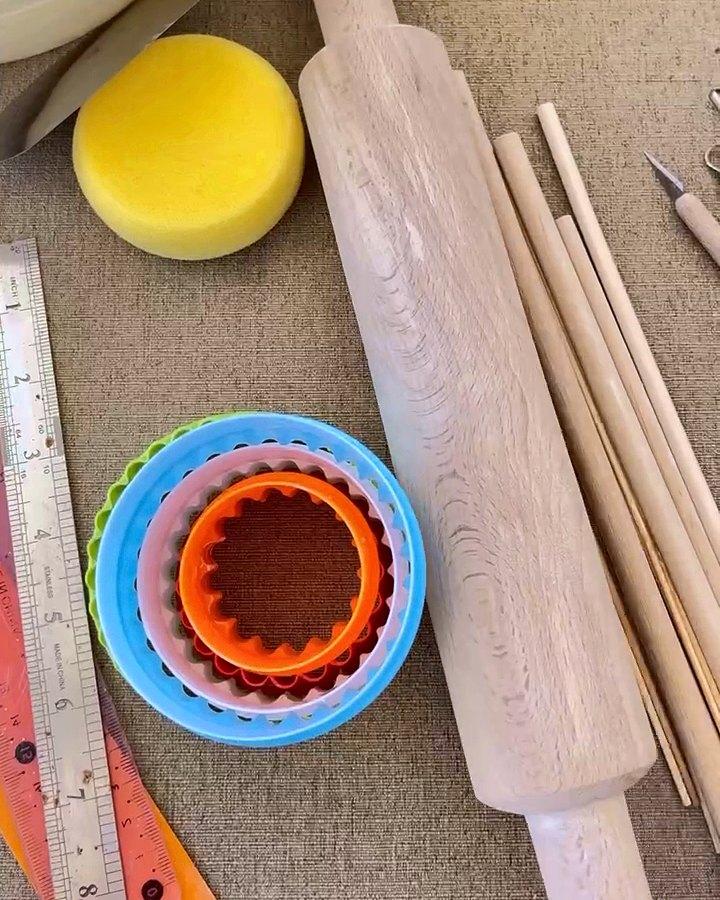
The full list, with what each tool does, is in pottery tools for beginners.
A six-week path to learn pottery at home
This is the order Nariman teaches in her course, condensed into weeks. Two or three sessions a week of an hour or two is plenty.
- 1
Week 1: feel the clay
Make pinch pots and roll slabs between guide sticks. Learn to press out air bubbles and smooth the surface with a barely damp sponge.
- 2
Week 2: flat pieces and drying
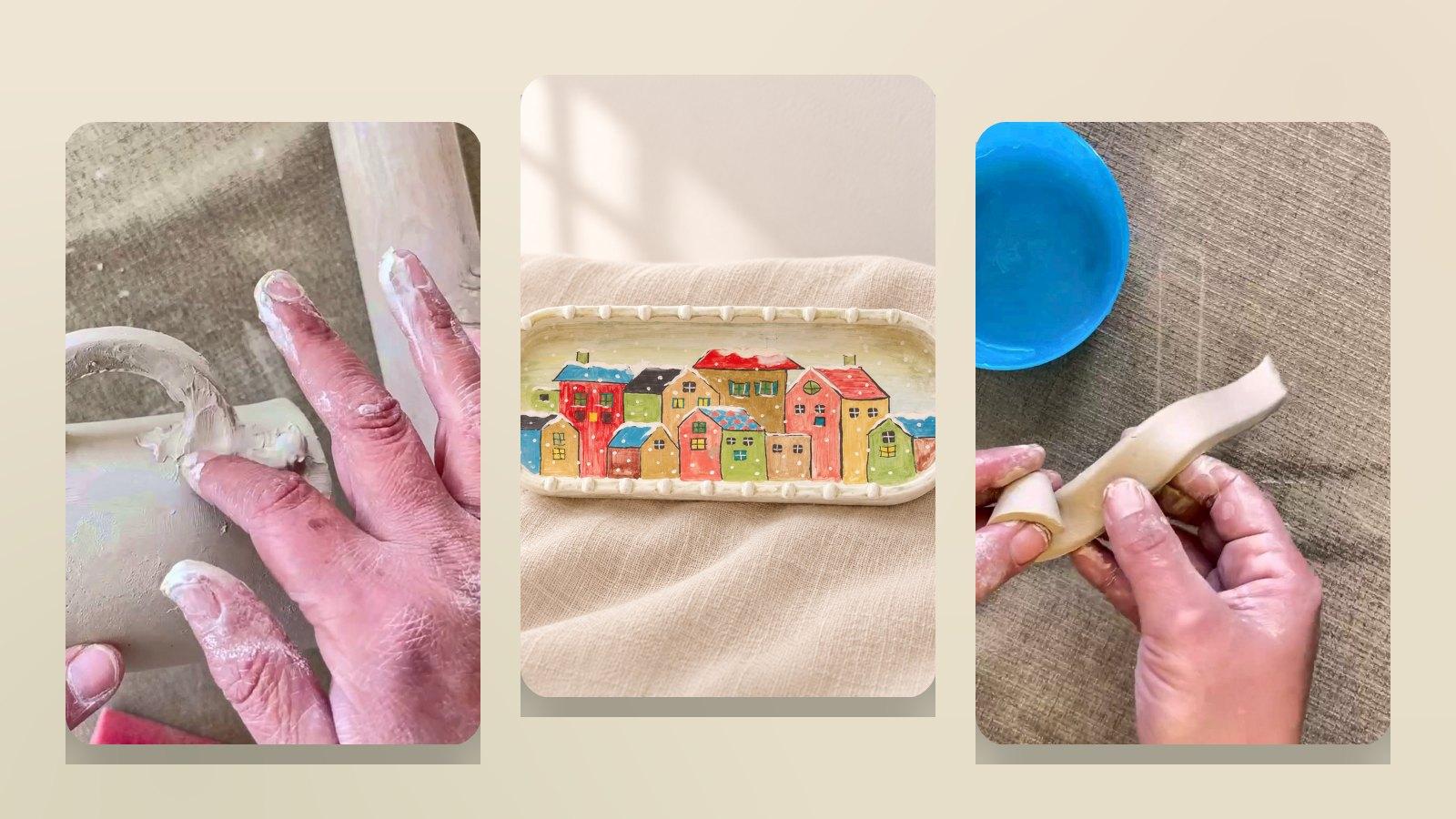
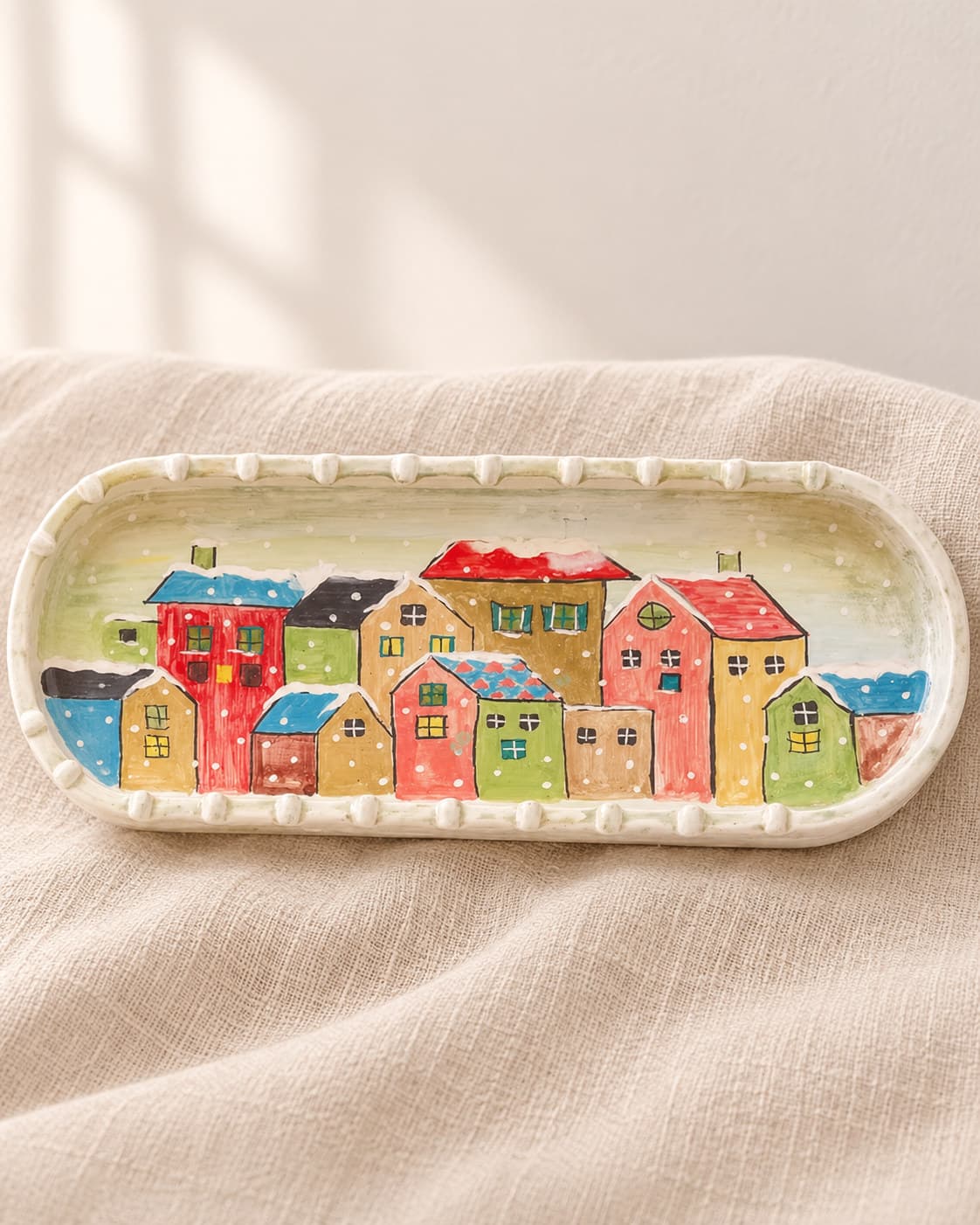
Cut coasters and house shapes from half-centimetre slabs. Learn even drying: turn flat pieces over every three hours so they don't warp.
- 3
Week 3: your first join
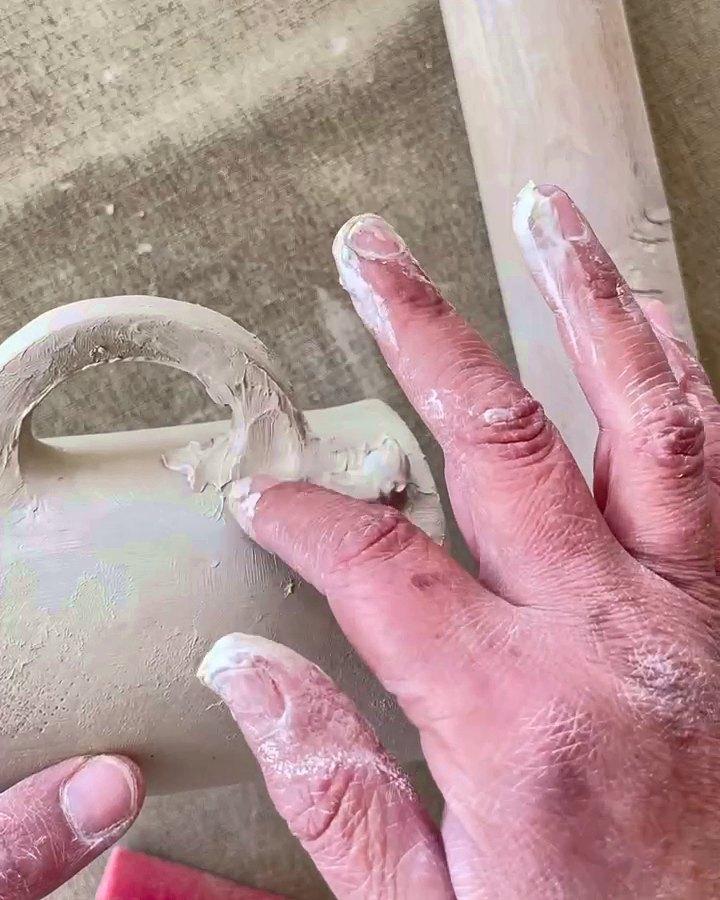
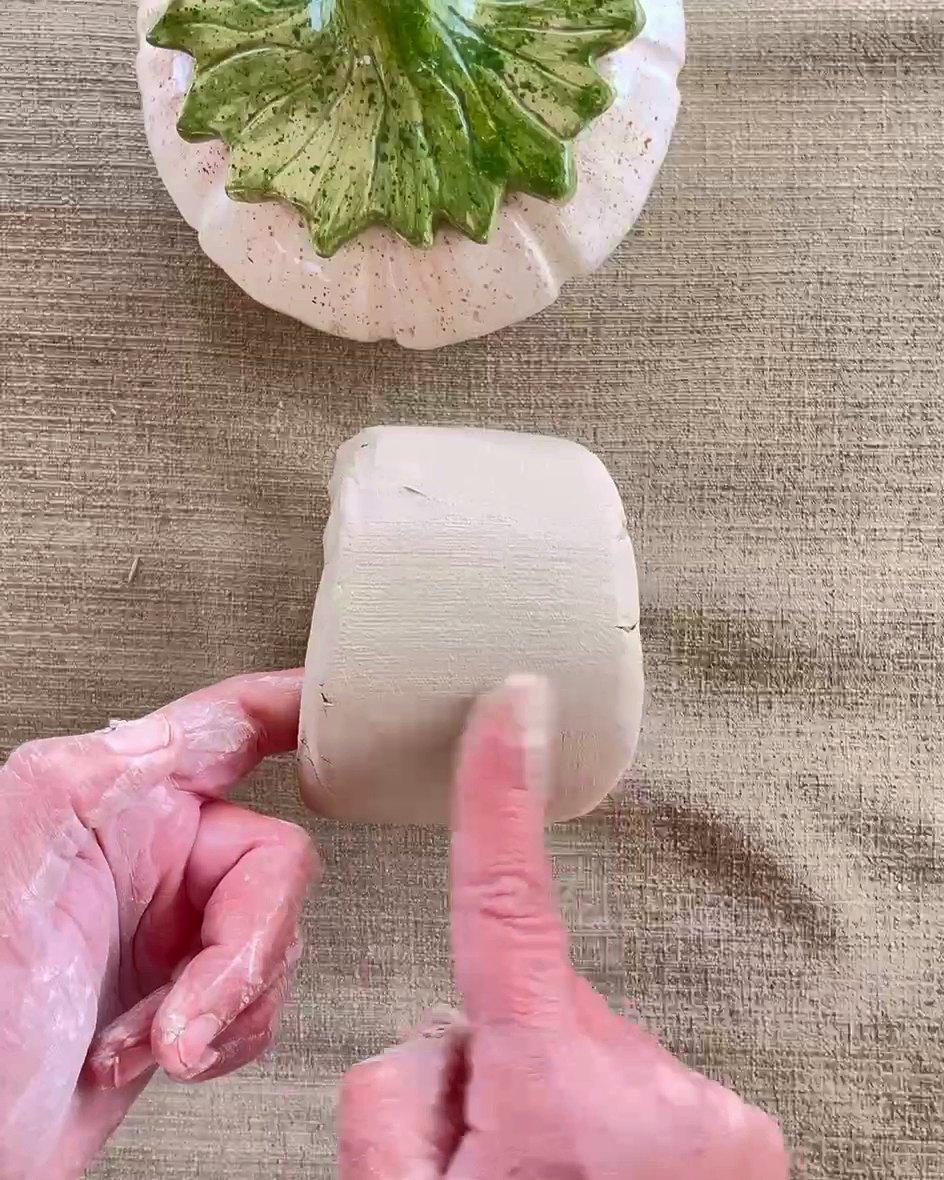
Build a slab cup from a round base and a rectangular wall. Score, slip, blend the seam, then add a handle once it is leather-hard.
- 4
Week 4: seamless forms
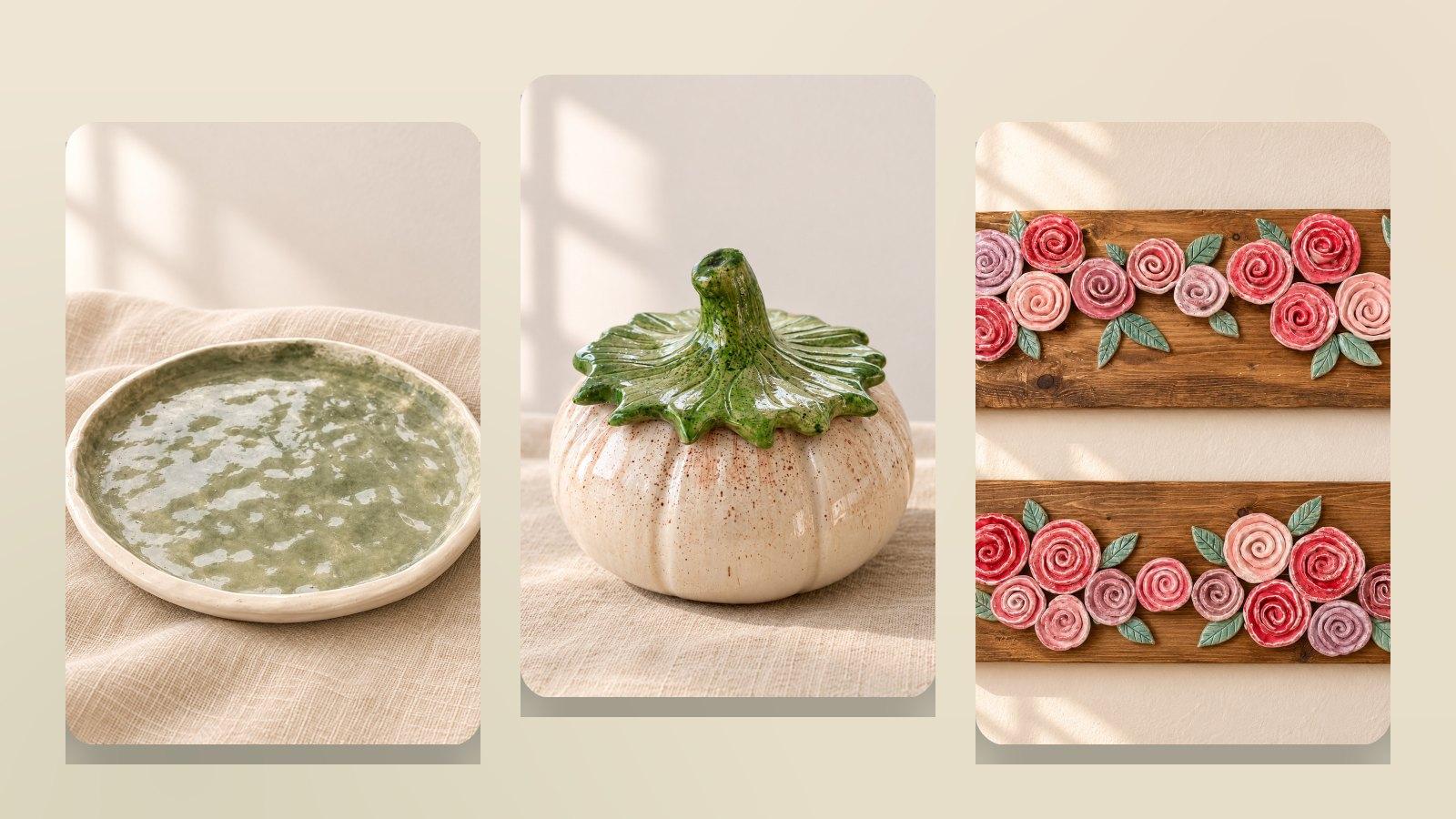
Raise a bowl from a single ball of clay without any joins, then make a lid that fits it.
- 5
Week 5: decoration
Press textures into slabs, make clay roses, and carve windows into a cylinder for a candle holder.
- 6
Week 6: finish, colour and fire
Clean bone-dry pieces, paint them with ceramic colours, pack them safely and take them to be fired.
How long does it take to learn pottery?
| Milestone | Typical time, practising 2–3 times a week |
|---|---|
| A pinch pot you like | First session or two |
| Even slabs and flat pieces that don't warp | 1–2 weeks |
| A slab cup with a handle | 3–4 weeks |
| A seamless bowl with a fitted lid | 1–2 months |
| Carved, pierced or fully painted pieces | 2–3 months |
| Pieces you'd happily sell or gift | 3–6 months |
Online course, local class or YouTube?
| Option | Good for | Watch out for |
|---|---|---|
| Local class | Hands-on feedback, a kiln on site, other students | Fixed times, waiting lists, often wheel-only |
| Free videos | Inspiration and single techniques | Scattered order, gaps between steps, little about drying and firing |
| Structured online course | A complete path in order, close-up hands, rewatch anytime | You need to arrange firing yourself |
What makes a good online pottery course
- It is filmed close up, from above, so you can see exactly what the hands are doing.
- It covers the boring parts: drying, cleaning, packing and firing, not only the fun shaping.
- It builds in order, so each project uses the skills from the one before.
- It uses materials you can buy anywhere, not a specialist kit.
- You can watch it in your language, at your own pace, as often as you need.
Nariman's Pottery for Beginners course was built around exactly these points: 23 lessons filmed outdoors, from materials to firing, with Arabic and English audio and subtitles in many languages.
Keep going when pieces fail
Every potter loses pieces. A crack in drying, a handle that pops off, a bowl that slumps. Look at what happened, change one thing, and make it again. Small cracks in dry clay can often be closed with a brush of vinegar. Large ones can't, so put the piece back in water and reuse the clay. Nothing is wasted until it has been fired.
Frequently asked questions
Can you teach yourself pottery?
Yes. Hand-building in particular is very learnable at home, because each step is visible and slow. What self-taught potters miss most is feedback, so watch lessons that show hands up close and compare your pieces to the teacher's.
Can you learn pottery online?
Yes, especially hand-building. A good online pottery course shows each technique close up, explains why steps matter, and covers drying, colour and firing, not only shaping. You still need somewhere to fire your pieces.
How long does it take to learn pottery?
With practice a few times a week, most beginners can make pinch pots and slab pieces within the first two weeks, a cup with a handle within a month, and lidded or carved pieces within two to three months.
Do I need a kiln to learn pottery at home?
No. You can learn every shaping and decorating skill without owning a kiln. Take finished, bone-dry pieces to a community studio or local potter who fires work for others. See how pottery firing works.
How much space do I need?
A table about the size of a kitchen table, a shelf where pieces can dry undisturbed, and access to a sink. See setting up a pottery corner in a small home.

About Nariman
Nariman is a hand-building potter in Jordan. She has taught her beginner course to students since 2022 and shares slow, quiet pottery and home videos on YouTube.