Quick answer
The pottery terms beginners need most describe clay's stages and how pieces join: leather-hard is firm but still damp clay, bone dry is fully dried clay ready to fire, bisque is clay after its first firing, slip is liquid clay used as glue, and scoring means scratching two surfaces before joining them.
- Clay stages, in order: plastic, leather-hard, bone dry, bisque, glazed.
- Score and slip is how every join is made.
- Underglaze and ceramic colours go under the glaze. Glaze is the glassy top layer.
- A cone is a measure of heat and time, not just temperature.
In this guide
Pottery has its own vocabulary, and lessons are much easier to follow once you know it. Here are forty terms you'll hear most often, grouped by stage, each explained in a sentence or two. Bookmark this page and come back whenever a word trips you up.
Clay and its stages
- Clay body
- A prepared clay recipe sold ready to use, with a stated firing temperature and colour.
- Earthenware
- Clay fired at lower temperatures, roughly 1,000 to 1,150°C. Easy to shape, bright with colour, slightly porous unless glazed.
- Stoneware
- Clay fired at about 1,200 to 1,300°C. Dense, strong and the usual choice for everyday mugs and plates.
- Porcelain
- A fine white clay fired very hot. Smooth and translucent when thin, but hard for beginners to control.
- Grog
- Fired clay ground into grains and mixed into a clay body to add strength and reduce cracking.
- Plasticity
- How easily clay bends and holds a new shape without cracking. Fresh, well-mixed clay is the most plastic.
- Wedging
- Kneading clay to even out moisture and push out air bubbles before you use it.
- Greenware
- Any shaped clay that hasn't been fired yet, whether wet, leather-hard or bone dry.
- Leather-hard
- Clay that is firm enough to handle but still slightly damp. The stage for joining, carving and trimming.
- Bone dry
- Clay with all its water evaporated. It turns pale, feels lighter, and is ready for the kiln.
- Shrinkage
- The loss of size as clay dries and fires, often 10 to 15 percent in total.
- Reclaim
- Recycling unfired scraps and failed pieces by soaking them in water and drying them back to workable clay.
Shaping and joining
- Hand-building
- Shaping clay without a wheel, by pinching, coiling or slab building.
- Pinch pot
- A small vessel made by pressing a thumb into a ball of clay and pinching the walls thinner.
- Coil
- A rope of rolled clay. Coils are stacked and blended to build walls.
- Slab
- A flat sheet of clay rolled to an even thickness, then cut and joined into forms.
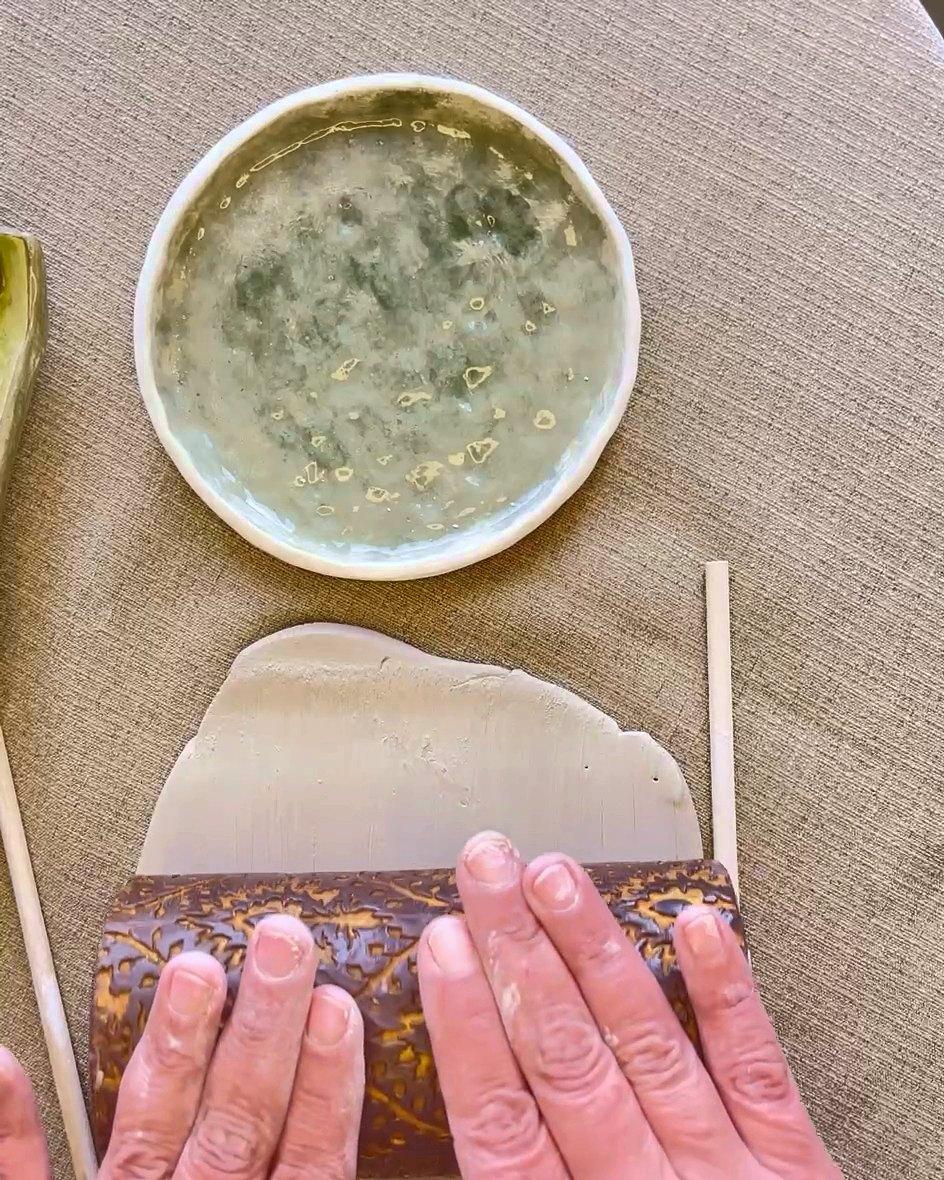
- Guide sticks
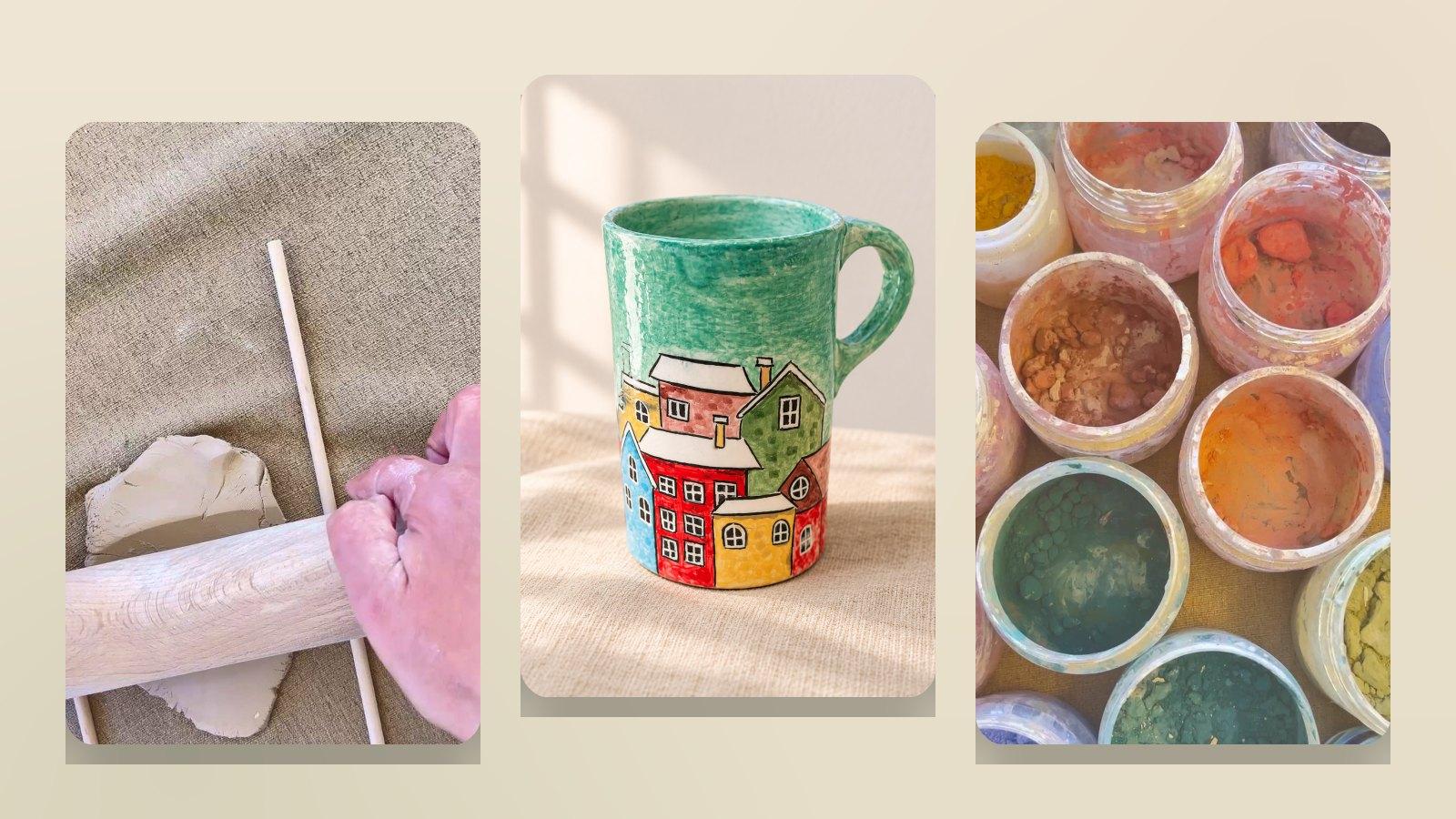
- Two strips of wood of equal thickness placed either side of the clay so the rolling pin makes an even slab.
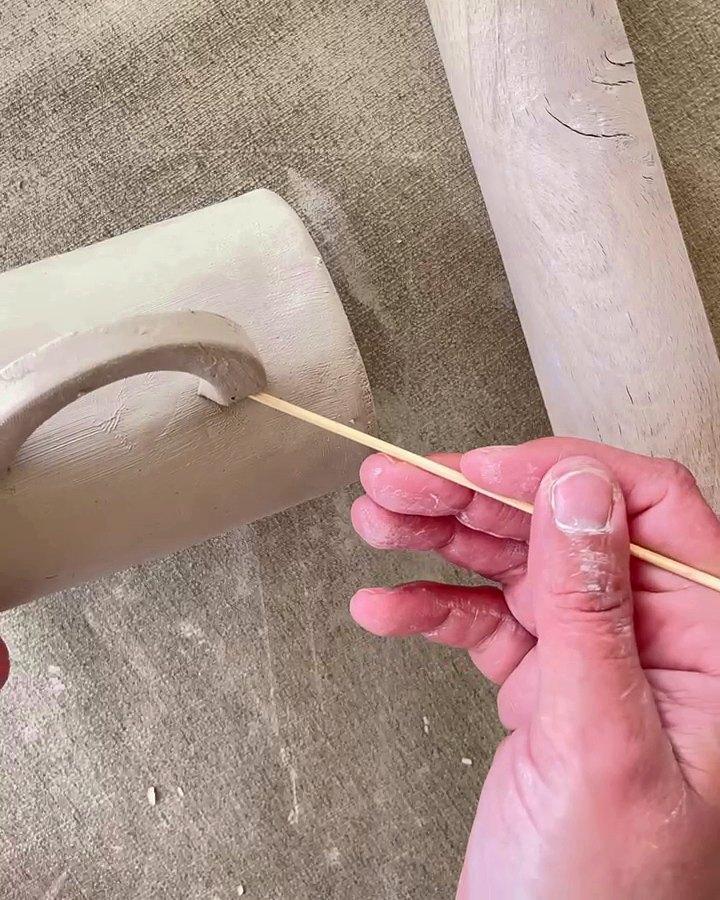
- Score
- To scratch a crosshatch into two clay surfaces so they grip when joined.
- Slip
- Clay mixed with water into a paste, used as glue between scored surfaces and as decoration.
- Throwing
- Shaping clay on a spinning potter's wheel.
- Banding wheel
- A turntable spun by hand, used to turn pieces while shaping, decorating or trimming.
- Rib
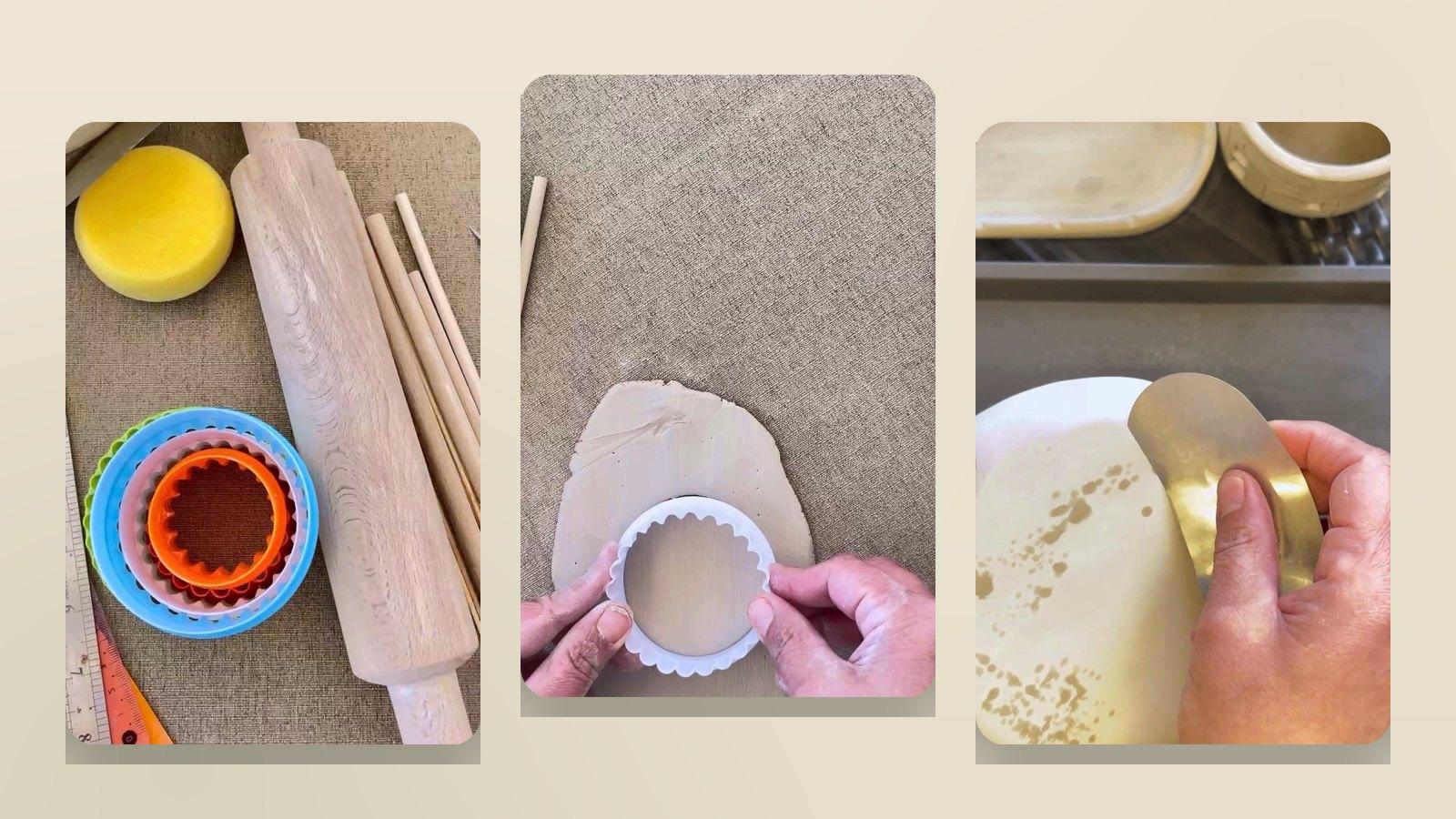
- A flat tool of metal, wood or rubber for smoothing, shaping and levelling clay.
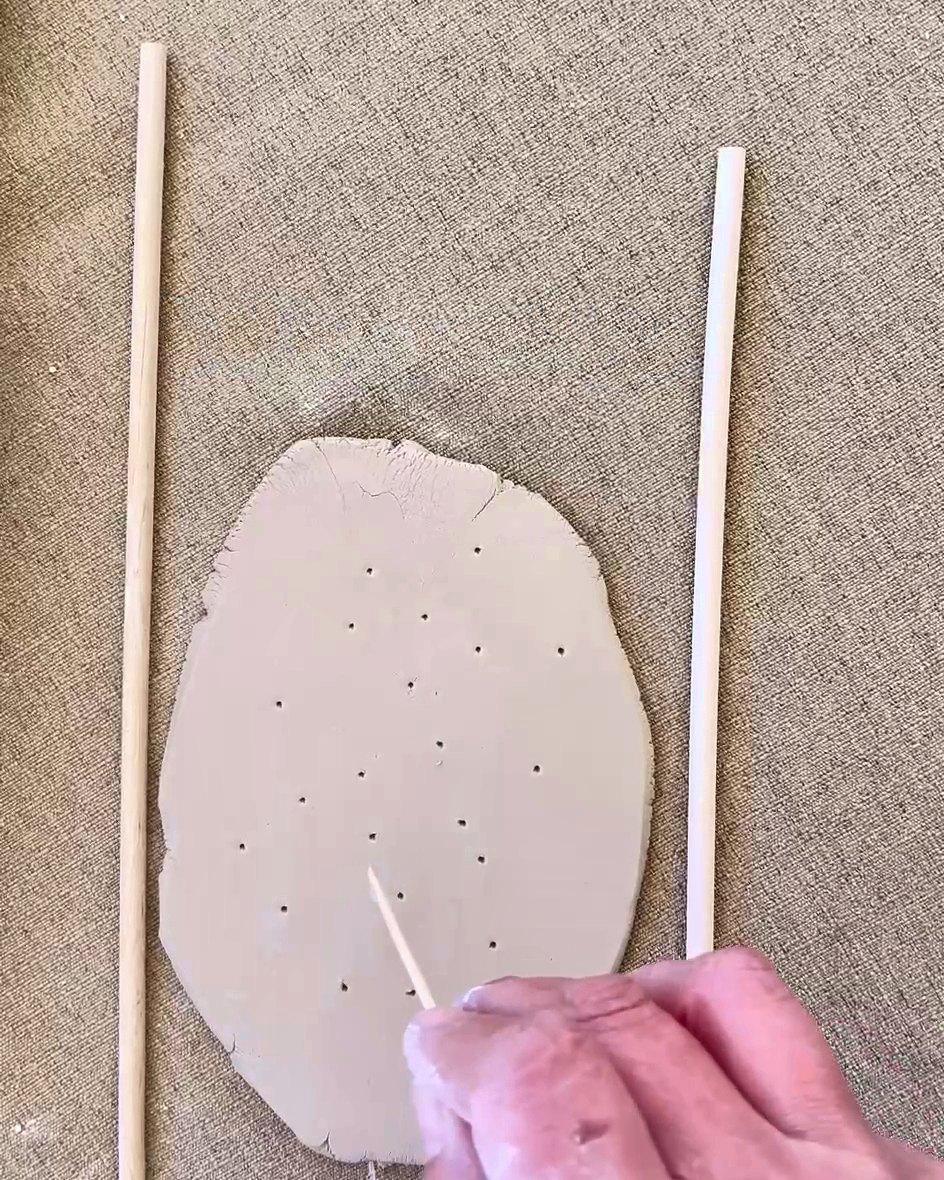
- Needle tool
- A sharp point for scoring, piercing air bubbles, cutting and drawing lines.
- Fettling
- Cleaning and tidying a dry piece: smoothing seams, levelling the base and softening edges.
- Vent hole
- A small hole pierced into a hollow form so air and steam can escape in the kiln.
Surface and decoration
- Impressing
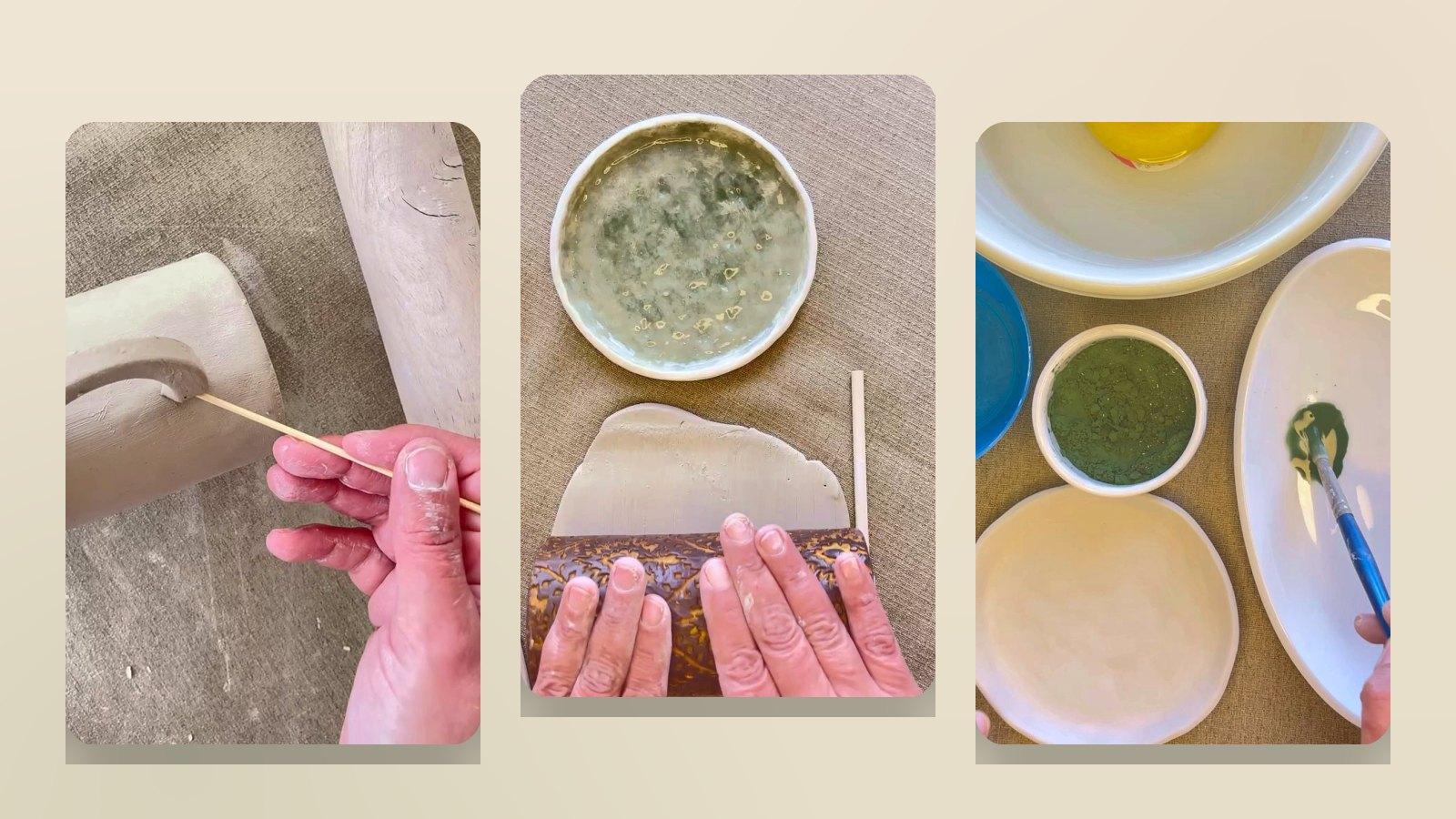
- Pressing texture into soft clay with objects such as leaves, lace, stamps or a carved roller.
- Carving
- Cutting designs into the surface of leather-hard clay.
- Piercing
- Cutting all the way through a wall to make holes or windows, as on a candle holder.
- Sgraffito
- Scratching through a layer of coloured slip or colour to reveal the clay underneath.
- Appliqué
- Attaching small modelled shapes, like roses or leaves, to the surface of a piece.
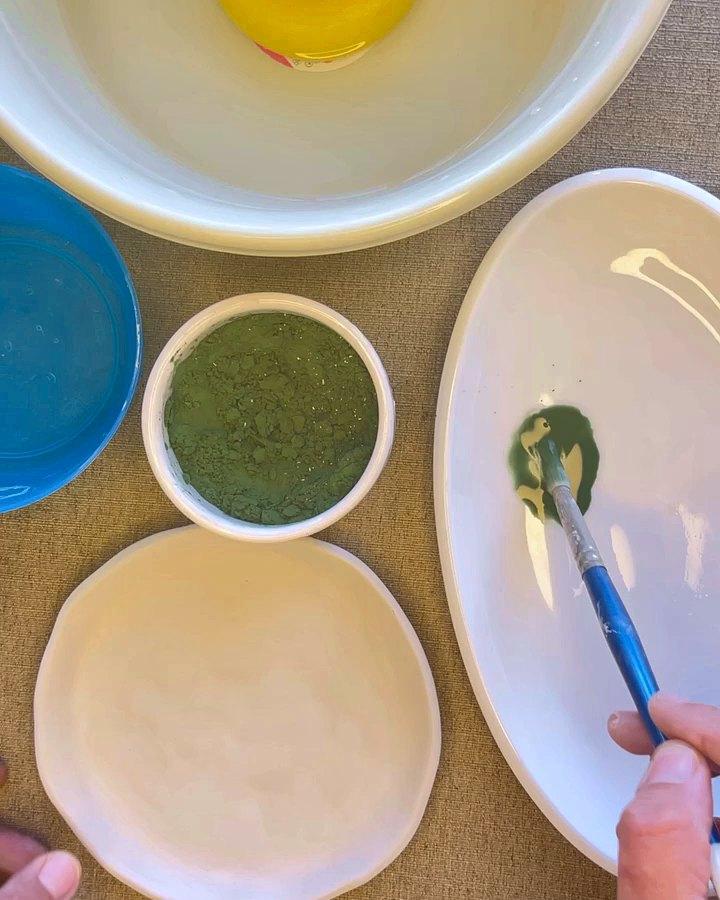
- Underglaze
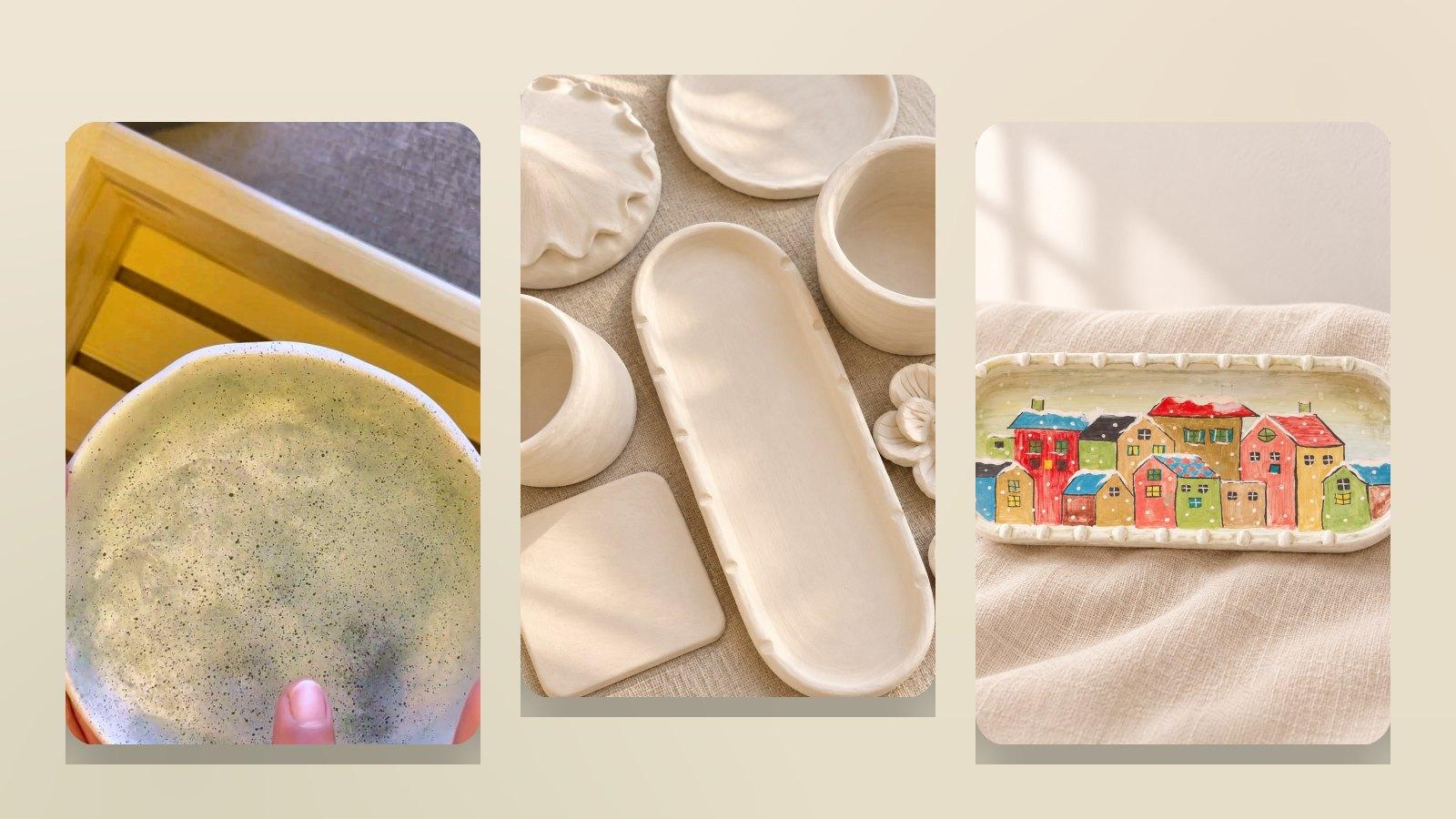
- Coloured decoration applied under a clear glaze. Ceramic colours mixed from powder work the same way.
- Glaze
- A coating of glass-forming minerals that melts in the kiln into a smooth, waterproof finish.
- Wax resist
- Wax painted onto areas, such as the base or a lid's seat, so glaze won't stick there.
- Crazing
- A web of fine cracks in a glaze, caused when glaze and clay shrink at different rates.
Firing and kilns
- Kiln
- An insulated oven that reaches the temperatures needed to fire clay, usually electric, gas or wood-fired.
- Bisque
- Clay after its first firing: hard and permanent, but still porous enough to absorb glaze.
- Glaze firing
- The second firing, which melts the glaze onto the bisque.
- Cone
- A small ceramic pyramid that bends at a set combination of heat and time, used to measure a firing.
- Vitrification
- The point where clay particles partly melt and fuse, making the body dense and non-porous.
- Thermal shock
- Cracking caused by a sudden temperature change, such as opening a kiln too early.
Ready to put the words into practice? Start with Pottery 101, or follow every stage on video in Nariman's Pottery for Beginners course.
Frequently asked questions
What is the difference between greenware and bisque?
Greenware is shaped clay that has dried but has never been fired. It is fragile and dissolves in water. Bisque is clay after its first firing: hard, permanent and porous, ready for glaze.
What does leather-hard mean in pottery?
Leather-hard clay has dried enough to hold its shape and be handled but is still slightly damp and cool, like a leather shoe. It is the best stage for attaching handles, carving and cleaning edges.
What is slip used for?
Slip is clay mixed with water into a paste. It is mainly used as glue to join scored pieces of clay. Coloured slips are also painted on as decoration.
What is a cone in pottery?
A pyrometric cone is a small pyramid of ceramic material that bends when it has absorbed a set amount of heat. Cone numbers describe firing temperatures, such as cone 06 for low-fire earthenware or cone 6 for mid-range stoneware.
About Nariman
Nariman is a hand-building potter in Jordan. She has taught her beginner course to students since 2022 and shares slow, quiet pottery and home videos on YouTube.